Valuation of AI: Early mania or a solid anchor?

When it comes to calculating the return on investment for technology companies, it is not easy to form an opinion by looking at this year’s or next year’s balance sheets. We are still far away from the phase where AI can deliver real transformation and value creation in business processes. There will be winners and losers on the journey there, and it appears that the stakes will be high on both sides.

The talk of a bubble forming in the early stages of the transformation might indicate the markets’ sensitivity to speculation, or it might reflect the pessimism about the results of the transformation, depending on one’s interpretation.


The AI rally has suffered two major blows so far. The first was the shock caused by Chinese company
DeepSeek developing a language model that could compete with its US-based rivals using very limited
hardware and incomparably low costs, thanks to different learning methods. The investors lost sleep over the news that a young startup could build something quite competitive vs. the massive investments by the magnificent seven. Regarding sky high valuations in Nasdaq, such a competitive threat could cause massive selling wave if the market is convinced there is not much of a solid moat gained through those investments. Wall Street questioned the return on artificial intelligence investments for months.


The second shock came with a wave of investment and financing rounds for young companies providing data center infrastructure. As analysts began to question how these investment announcements amounting to trillions of dollars by OpenAI and others would be financed by their cash flows, the initial reaction was felt in the valuations of those young companies they make agreement with to use the capacity of the data centers they will build. Announcements from OpenAI over several weeks, involving astronomical service purchases and investments in those infrastructure providers, led to market commentators’ concerns about an “over investment and low-return trap”. The launch of Google’s Gemini3 model also made headlines, raising concerns that profitability in language models would be further limited through competition.


At the end of 2025, two different views continue to battle it out among market players on the theme of
artificial intelligence investment. Those who believe a bubble has formed around the theme (e.g. Jamie
Dimon and Michael Burry) share that all the classic indicators of bubble formation, such as excessive investment, overvaluation, over-positioning and leverage, are currently valid. They emphasize that
the rapid borrowing by large technology companies to finance these investments increases the risks that would arise if the bubble bursts (a debt crisis on top of capital pricing).


Opponents such as Blackrock, however, argue that unlike the dot-com bubble environment, the main
players are generating high profits and cash flow now, investments will further increase revenues and profits, and that they will not have a problem paying back any financing. Google’s CEO claimed that, leaving aside the formation of a bubble, the market does not fully understand yet the potential returns for artificial intelligence players, and therefore current valuations are even conservative. Some analysts believe that the integration of AI into physical processes through robots has not yet been priced in. Both sides have arguably solid arguments.


The investment plans announced by industry leaders contain astronomical figures for the current (early) stage of AI’s engagement in the economy. However, like any investment, the focus of the investor is on future market conditions rather than the present. We are still in the early stages of the economic and social transformation that AI will possibly trigger. Today AI can classify complex and voluminous data, establish relationships between them, and draw conclusions (Palantir, IBM), write (language models), code (Github, etc.), replace employees in customer communication (Salesforce, Ada, Genesys), support psychological therapies, and interact effectively with humans (as assistant or companion). At this stage, it is finding its place in areas where the amount of service produced is limited by the high cost of labor involved in the production process. The first signs of this are the layoffs of software developers in the US and the difficulty new graduates are starting to have in finding jobs in this field.


In the second stage, the deeper and broader integration of AI into business processes such as planning,
finance, insurance, purchasing, logistics, production, storage, sales, and after-sales support will significantly increase the total accessible market for its pioneers. The assumption set used in Big Tech’s investment decisions includes the infrastructure scale that this level of accessible markets will require in the 2030-2035 period. Therefore, the return rate on these investments will depend on (I) the success of new ‘domainspecific’ software (‘agents’) that will bring AI into business processes at that stage, and (II) on pricing models and the diffusion they achieve. Then press coverage will shift to the investment requirements of main players in different sectors of the economy to have these agents in place. At that point, the question will be whether added value created in business processes with AI (through reduced costs or increased efficiency/prices) should be enough to pay back the investments currently announced by Big Tech and those will be made by their customers then.


In the second stage, SaaS (software as a service) companies with expertise in business processes and
consulting firms that are tasked with integrating SaaS solutions into these processes will possibly be the main enablers of AI. Analysts are concerned about the extent to which these two groups of players will be able to compete with Big Tech (a topic of discussion that is beyond the scope of this article). If these concerns persist, I will not be surprised to hear announcement of the deals Big Tech are acquiring SaaS players and consultant firms within a few years to integrate their data and capabilities to AI models as taskspecific “add-in” modules.

The uncertainty does not deter Big Tech from making costly claims through investments about the future since fear of missing out on the competition overcomes prudence and conservatism, at least for now. There will be winners and losers, and it appears that the stakes will be high on both sides.


Following huge transformation ahead, most people will probably find it much harder to afford a much easier life.

  • Translation of my article in Dunya Gazetesi (leading Turkish economy newspaper) on 20th of December.

Bad weather, good reads

Stormy weather in Istanbul gave me more time to read in the weekend. Below are the summary of the remains of the week in my notebook:

> Foodservice Recovery in the US

With its defensive characterics in staples, food distribution also benefits from growth in relatively discretionery segments.

Restaurants -%60 of the overall foodservice=$600Bn– proved to be more resilient than we thought during the pandemic: Only 11% were permenantly closed and the industry fully recovered pre-COVID level sales in 2021. Although its growth in 2022 has been entirely price-driven, greater productivity per unit is encouraging.

Point to note: Independent restaurants are 4x profitable for foodservice companies than overall restaurants channel on the back of higher penetration of private label, higher service levels and dynamic pricing.

Retail ($71Bn) is expected to be fastest growing part of the market with 7-8% growth p.a.

Travel & Leisure represents $63Bn part of the market and still down 40% vs 2019 levels! The segment is expected to grow around 3-4% p.a for the next decade.

Healthcare ($31Bn) is highly resilient and captured all of the pandemic sales losses.

Education ($34Bn) is another resilient part of the market that fully recovered to 2019 levels and expected to grow by 2-3% p.a. for the next decade.

Looking at the valuation of major players, current levels (9,5x-13,0x EV/EBITDA) are much lower than pre-pandemic levels (16,0x-21,0x) and considering M&A track-record of the major players (CYY, USFD, PFGC) looks reasonable.

> Fast-growing Apple Pay adoption is threathening PayPal

As per #Salesforce eComm data covering 1.5bn shoppers globally, global eComm has fallen 2% in November 22. UK & Ireland eComm are weakest in Europe, followed by Germany and France.

Interestingly, Apple Pay grew 59% (makes up 6% of US eComm) in November in the US while PayPal (15% of US eComm) adoption has fallen 8% yoy.

Unpleasent take for PayPal shareholders: Extremely benefited from pandemic era surge of eComm, PayPal shall possibly continue to face strong competition from Apple Pay in the next years.

> Electric Smelter Furnaces’ (ESF) advance in steelmaking

Direct Reduced Iron (DRI) is put forward as main tool for decarbonisation of steel making in Europe. Problem is that it requires high grade iron ore pellets which is rare in the proven reserves (c.3%). A solid alternative could be ESF which is tried in the pilot applications across Europe by #thyssenkrupp and #tatasteel.

ESF uses same converter (no certification changes), cheaper electrodes, creates much more slag and use a wide array of iron ore feedstock.

If ESF proves to be a preferred way to decarbonise, met coal demand deceleration could gain further monentum. Met coal producers are possibly very good examples of #valuetrap in the market.

Act, while waiting for Godot

Auto OEMs has been valued at low multiples despite their resiliently high cash flows in last 3-4 years. (Hard to understand for me!) Pandemic, #semi shortages and EV #disruption by new (and mainly Chinese) entrants have been among the reasons for investors/analysts to justify low multiples. (None is credible in my view.)

The news is that US is waking up to the EV race and Inflation Reduction Act shall possible be instrumental in this. IRA includes an array of incentives (similar to Chinese incentive scheme) for electric vehicles and clean energy investments in the US.

$7,500 EV tax credit, formally known as the clean vehicle credit, is introduced by IRA and this figure is split into two equal halves of $3,750. In order to be eligible for the new credit, vehicles and consumers must meet certain requirements: 

  • A vehicle is eligible for one-half of the total credit ($3,750) if the vehicle has battery components that are manufactured or assembled in North America. 
  • To be eligible for the other $3,750, a vehicle must have critical minerals that were extracted or processed in the U.S. or countries with which the U.S. has a free trade agreement, or use critical minerals that were recycled in North America. 
  • Final assembly must take place in North America for a vehicle to be eligible. 
  • Only cars under $55,000 or SUVs, vans, and pickup trucks under $80,000 are eligible for the credit. 
  • On the consumer side, the income cap to be eligible for the credit is $150,000 for single filers, $225,000 for head of household and $300,000 for joint filers. 
  • There will be an option to apply the new credit at point of sale starting in 2024 and will end by 2032.
  • The new credit requirements for battery components and critical minerals will take effect January 1, 2023.

Interestingly, The IRA also establishes an unprecedented credit for used EVs ($4,000 or up to %30 of the vehicle price, whichever is lower).

As expected, EV charger credit has been extended through 2032. The credit is available for both individual and commercial uses to help cover the cost of charging stations.

Main motivation of these incentives are to accelerate US EV factory buildout and initial feedback from OEMs showing that could be achieved. The incentive package is well-timed for OEMs as EV demand in two largest EV markets (China and Europe) has been sluggish. Even limited upside in US EV demand would offset the downside risks for EV demand and roll-out (which were exagerated in my view, as in the case with all ‘hot topics’).

OEMs are nowadays busy with securing their place in EV battery and equipment supply chain:

> Tesla and VW is trying to internalizing some of EV battery production while majority of other OEMs are building JVs with battery cell makers.

> VW and GM announced battery material JVs on cathode/procursor areas.

> Long-term agreements with miners become a common practice (STLA, Renault, GM, Ford) in last two months, securing supply for lithium, zinc and other critical raw materials.

> Tesla, GM and BMW also shown interest to enter lithium refiningas well as material recycling.

All these efforts shows to me that OEMs’ managements finally decided to put aside their waiting mode for emerging battery technologies and act on what is currently available in terms of technology and materials.

One should also act, en attendant Godot.

Coffee vs. Semi?

When in comes to strategy, it pays to have a closer look at the global market leaders which are -in general- the quality assets in terms of their operations, services and financials performance.

As discussed before, #Starbucks is one these with sticky and loyal customer base.

It hosted Investor Day on 9/13 at which the management surprised the market players by guiding 3-year outlook of EPS growth 15-20%, driven by investments in partners, customers and stores. The announced algoritm includes 10-12% revenue growth, global unit growth of 7% and US SSS (same store sales) 7-9% and progressive #marginimprovement.

Demand for the company’s products show no slowdown despite price incereases. Analysts argues that this achievement is closely tied to a number of factors including its sophisticated digital ecosystem, most frequent customer base in restaurants (1-2x a week), product portfolio that is difficult to replicate i.e. highly personalized product mix. The latter is also a serious challenge in terms of store productivity. Majority of the bestseller products at #SBUX (Cold Brew for instance) have labor intensive processes. This not only increases average #waitingtime by customer at the delivery desk (which is an important problem if someone is waiting you at a table or if you are just passing by a store) but also increases the pressure on the staff in the stores that are designed to fill 1,200 orders daily but actually serve around 1,500 on average.

Management is planning to leverage on the technology (#automatedordering for beverages, coffee and merchandise, #loadbalancing between stores to deal with peak hour demand, deployment of AI tools to improve wait times) and HR tools (better compensation, career planning) to deal with “good problems” they have in the system under consistently increasing demand. Will have a close eye on these fronts.

It will also be interesting to track what the management shall do for the Delivery which is a small (2% of revenues) but growing channel for the company. SBUX has an exclusive partnership with Uber Eats which shall become non-exclusive following the planned launch with DoorDash next year.

If the guidance will be achieved, SBUX could well be benchmarked with the Tech stocks in terms of growth. Comparing coffee with semiconductors or online advertisement!

Strategy is a great domain to involve.

Age of Ad Networks

#Digital advertising market is going through a serious change for the last couple of years. State-level privacy laws in the US and platform privacy policy decisions (ATT of #Apple for instance) those have propelled are changing the ownership of the data available in the web and platforms and the ways it could be deployed by the platforms and advertisers.

Once having their utmost privilege to the abundant “first-party” user data and freedom to process these to create a well-crafted audiance “profiles” for the advertisers, platform companies such as Facebook and Google are trying to turn their apps into content and app distribution portals. AMP (Google) and Instant Articles (Facebook) are the recent examples of this trend. That is happening because “hub-and-spoke” model* of digital advertising (summarized at the end of this article) is not working well anymore.

And that is the primary reason behind recent collapse of #Meta share price as its first-party data (your likes, comments and inputs into the groups) is not much helpful for #targeting as your purchases in a mobile game or on the web.

So what is the next?

Many companies (advertisers) are developing their own proprietary ad network. Yes, that is.

Reason being that will allow them to #monetize their own data (and #Apple is among them).

Just to provide a couple of instances:

> Walmart is expanding its ad business through M&A

> Following UberEats, Doordash launched an ad platform.

> Zoom is introducing ads to its for free users

> Ironsource acquired an ad network Tapjoy…

So dear investors, get ready to see “Ad Network” lines in the 10-Ks of listed companies soon.

And sorry for those large platforms, those good old days seems to be too far away to make a good comeback. They, certainly, will try to adapt to the new circumstances.

*The model was based on operating a data warehouse full of usage “signals”, converting those signals into #targeting parameters, applying those to the ad inventory and creating positive feedback loop for the advertisers through engagement data.

Software part of EV value chain: Un trajet court

Back in March, I shared my expectations on the changes in automotive value chain in next couple of years (will revisit those expectations as we got into next years to see how these shall play out.) and promised to elaborate on software and raw materials in a separate discussion. Here is a “trajet court” on the software part of EV value chain:

Autos are becoming a “software defined” vehicles. Meaning that, just similar to the smartphone migration trend over the past decade, the traditional vehicle shall possibly transform into a computing platform to support applications such as V2X, smart cockpit, entertainment and autonomous driving.

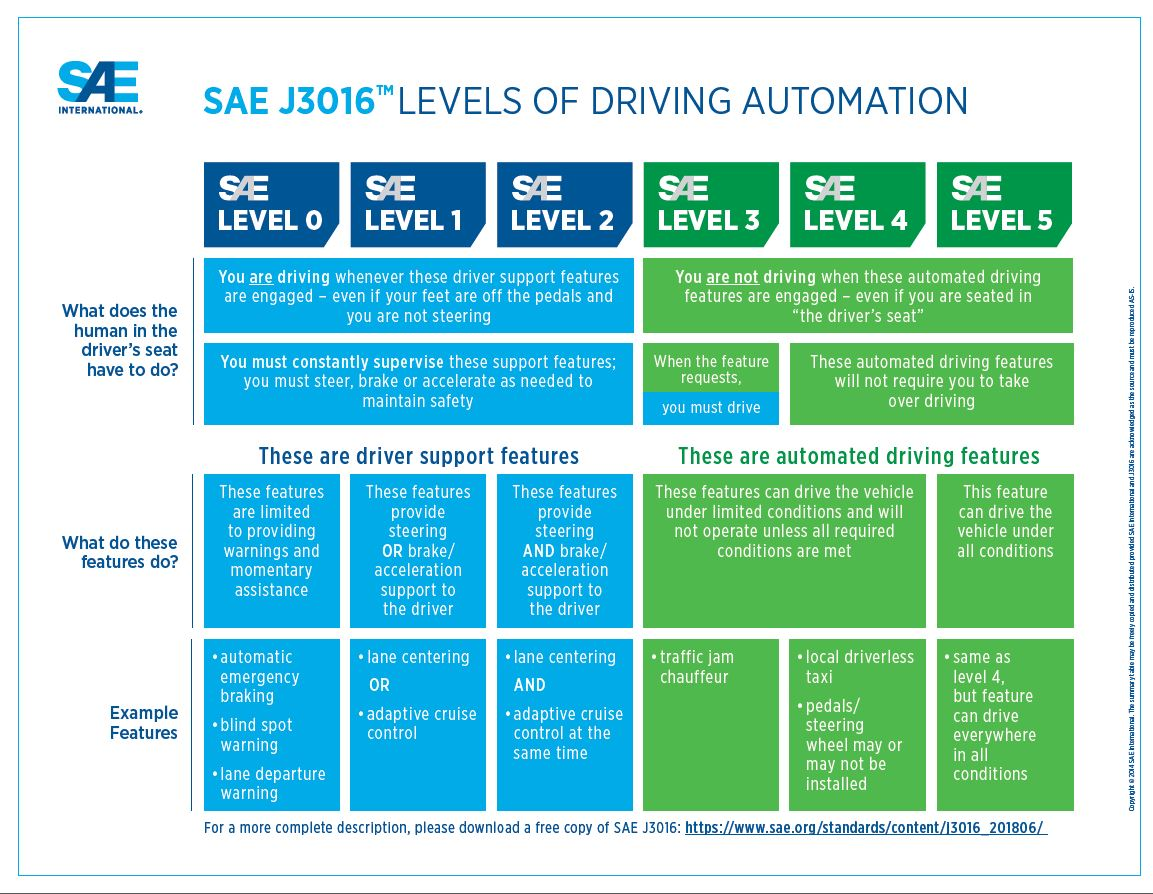
As per Society of Automotive Engineers International, diving automation is classified into 6 level, L0-L2 are considered as driving assistance (that is what the automobiles you are using right now offers to a degree) and L3+ are considered to be highly autonomous.

L3+ are yet to be commercialized since it will require the legislations and infrastructure to further developed. However these are being heavily tested especially in China by #Baidu who is trying hard to commercialize its auto software solution to diversify its revenue stram away from advertisements and in America by Mobileye (#Intel).

The autonomous driving value chain includes sensing (maps, lidar, camera), decision-making (OS, algorithms, domain controller) and execution (hardware, breaks etc.).

Structure of auto computing systems, which are critical in sensing and decision-making dimensions of the value chain, could be categorized into the following:

  1. Computing platform: Consists of (i) Processors: Control chips (MCU) which manages data collection, sensing and actuating, Computing chips (CPU) that executes instructions and AI Chips (GPUs or ASICs or FGPAs), power semiconductors (IGBT, MOSFET etc.) and sensor chips (TPMS etc.)
  2. Operating System: #Linux, #QNX, #Google or #Baidu which will oversee engine control, battery management and infotaiment
  3. Smart Cockpit: Voice/Speech recognition, movement recognition, gesture recognition
  4. ADAS: Autonomous parking, adaptive cruise control, electronic brake system, HD map integration
  5. Algorithm library
  6. Middleware

Huge competition is underway for computing platform and operating system parts as these are the backbone of auto software market and the evolution of smart cars offer huge TAM for semi and software companies.

A very good overview, I believe, on what is going on in the market was provided by Qualcomm CEO Cristiano Amon in Bernstein 38th Annual Strategic Decisions Conference (June 1, 2022):

“Well, couple of things have changed now high level, number one, I think car companies realize that they need to have a direct relationship with semiconductor companies, some of them didn’t understand what the importance semiconductor supply chain.

Number two, the market expect the car companies to be tech companies. I love to keep
bringing in this example. At some point Rivian selling hundreds of trucks was worth more
than Volkswagen. So the — what is basically saying is the companies need to be tech
companies they need digital assets. With piece number three, which is it’s not about
components from the care, but do you actually have a digital platform that they can build
on the digital platform, a lot of software assets and then apply that up and down for
different models
. That’s the unique thing about the digital chassis.”

Turkish automotive suppliers and IT players including #ventures and #startups are better to have a close eye on what is going on the autonomous driving value chain to keep their shares in execution part of the chain as supplier to OEMs and (hopefully) to try to capture a share in sensing part.

Prime as a service

Back in 2015 Amazon decided to end the service to independent merchants to run their web stores (Webstore) to focus on amazon.com and sent its customers to Shopify, announcing the Canadian company as preferred partner. In return, Shopify agreed to offer #AmazonPay to its merchants and allowed them to list their products on Amazon directly from its dashboard.

That decision of Amazon – made on the wrong assumption that small retailers would not succeed in ecommerce which tends to be dominated by #economiesofscale – allowed Shopify to become a high-growth business. small retailers reached a turnover of over $150bn.

Amazon recently decided to offer “Buy with Prime” service to merchants off its platform, letting them to use its payment and fullfilment services. Since Prime significantly increased consumers’ service level expectations, merchants have constantly try to catch up with Prime.

Would Amazon makes the competition get better? “Ça depend du point du vue.

The play is that if customer choose to buy with Prime, it needs to pay via Prime Pay by which Amazon will have transaction data. That data is highly valuable input for conversion-data-driven advertising product.

One should also remember that Amazon is the seller in most categories and its private label business is growing well. Such data will possibly also be used to improve its own offerings in numerous categories.

Amazon will not only leverage its logistics costs and Prime Pay but also have much larger data to help on advertising and product customization. Shopify on the other hand will benefit from its merchants growing business via Prime network but possibly lose on its logistics operations.

It will be tempting to see how Prime network could be leveraged as in the case of AWS and what will it mean for the merchants and platforms like Shopify.

to be or not to be…

As you know from my recent posts, I am having my eyes constantly on the developments globally in transforming industries such as #energy, #transportation and #automotive.

OEMs are struggling versus the competition of new entrants in #EV domain. BMW, Ford Motors and Daimler are among those struggling with EBIT margins around 7-8% in recent years (except covid period). They are currently investing billions of dollars to achieve their transformation and investors are looking at the progress very carefully.

No post on autos could do without some auto visuals 🙂 I ended up choosing Daimler EQXX…

I expect the following changes in automotive value chain in next couple of years:

  • Dramatic overhaul of go-to-market: Starting from Europe, the dealerships will be transformed. It is not acceptable for dealers to earn 300-700 bps while OEMs are making c. 7-9% margin. Order-to-delivery cycle will probably be run by OEMs. Kind of agency models shall be developed and prices and commissions of agent shall possibly be fixed for each country. OEMs shall run flagship “technology stores” in the centers of cities and you will “experience” the models in these stores. This is already in progress in China. Newcomers such as #Apple and #Xiaomi shall also use this model. In the US market where dealers have greater power compared to other markets, the diffusion of agency model shall probably take a decade or longer however it is clear to me that franchise model shall even end in the US. Tesla’s distribution costs are hard-to-beat now however this is “to be or not to be” issue to handle for OEMs.
  • Players will have to reduce #complexity in their #organizations and #products. Not only EVs shall need fewer number of components but also EV players would need much leaner organizations. This shall result in loss of certain know-how through downsizing their organizations but possibly enhance their decision-making speed. Reducing the complexity in their products would ease supply chain and lower their huge working capital need.
  • They need to improve quality of products dramatically. Warranty costs are significant part of total operating costs and needs to be put down. Only way to achieve this is to manage substantial increase in quality of products. This shall be a critical step which could call the winners and the losers.
  • OEMs use lots of working capital. Partial release of these is inevitable to reach higher FCFs. Production needs to be modified into a “build-to-order” system to achieve this. What a challenge!
  • Advertising costs are huge burden in the P&Ls. The industry has to get rid of majority of these to achieve the margin its investors are asking. Having a customer loyalty like Apple’s is the only way out to achieve this! Once achieved, that could bring dramatic reduction in marketing costs. I deliberately used Apple example because an electric vehicle is a software-driven tool. #Software, in my view shall be the new determinant where the competition will be. (touched upon that before in my review of the application of AI in #EV)
  • Safeguarding raw materials to avoid any shortage in supply. Average EV battery would probably (acc. to battery technology) need 50kg. of nickel along with lots of lithium. If you look at the nickel and lithium market nowadays (under heavy impact from Ukraine war), the concept becomes seld-explanatory…

There are more dimensions of this transformation journey, that is sure thing. But as I am trying to adopt 5min. rule for each blog post, better to stop here. Planning to elaborate on software and raw materials in a separate discussion.

Notes on Cloudy February

Here are my pins on trends and developments in world markets in February 2022:

* Port congestion in West Coast and freight costs are pushing US #brandowners and #retailers to diverge their supply bases away from pacific (China, Vietnam) into #Caribbean and #southamerica . Common theme in multiple FY 2021 results calls especially of listed consumer companies in the US. However it is risky and takes patience to do; #rockybrands management provided a good example: “We will slow play that. I cannot stress enough to you and anybody in the marketplace if a boot fits and performs and you move it and it doesn’t fit and doesn’t perform the same way. It is the fastest way to lose that product. “

* Recent decisions of #bp and #shell to get out of #russia by fireselling their valuable assets ($25bn of Rosneft stake for bp and Sakhalin assets for #shell) at a huge discount urged investors to question (disrupted) #corporategovernance and managements’ lack of concern for #shareholdervalue. TotalEnergies seems to be taking more prudent approach.

I am wondering about whether Depository Receipts of russian companies which makes up considerable portion of #londonstockexchange index will continue to be traded. #norilsknickel DR is suspended already.

* China signed a new gas pipeline agreement with Russia to buy 50bn m3 of natural gas per annum. The pipeline has around same capacity with cancelled Nord Stream 2 project.

* China internet ecosystem is bringing down platform walls. Following recent regulatory changes, ecommerce sites and non ecommerce platforms such as #WeChat, #Douyin and #Kuaishou in China now have started to open up, albeit gradually, to search engines and other ecommerce sites. The ecommerce related performance based ad market in China is estimated to be around $24-28bn. #BIDU is a good candidate to seize a considerable slice from this pie in near future. Top #Alibaba apps shall also launch inside #WeChat and #Alibaba expect meaningful incremental traffic into these as WeChat mini programs command huge traffic.