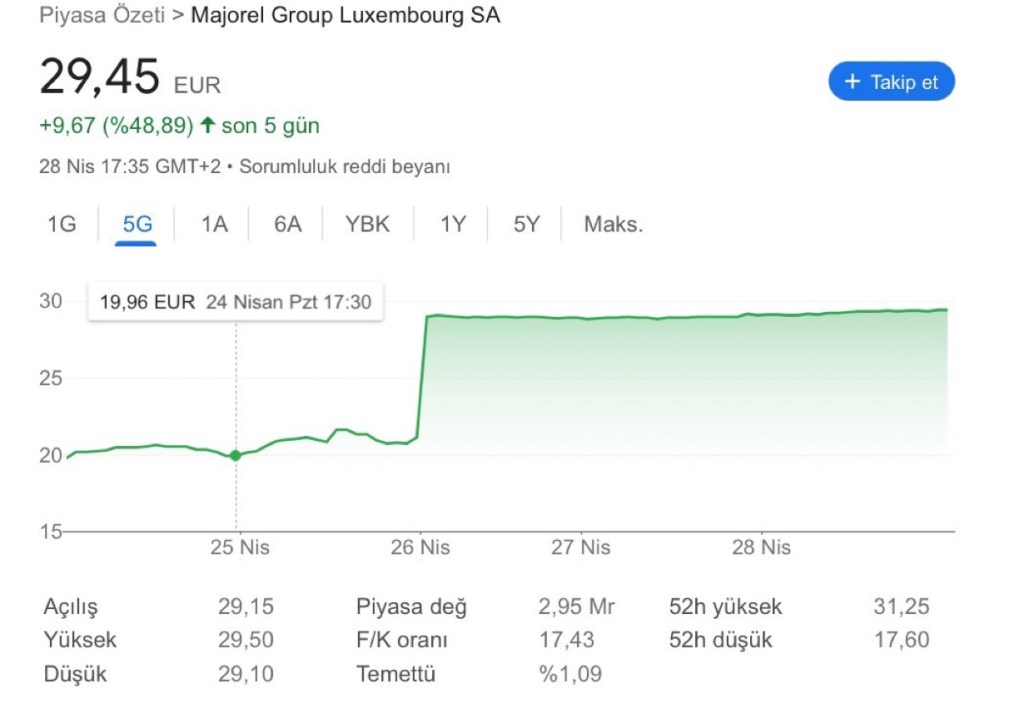
Valuation of AI: Early mania or a solid anchor?

When it comes to calculating the return on investment for technology companies, it is not easy to form an opinion by looking at this year’s or next year’s balance sheets. We are still far away from the phase where AI can deliver real transformation and value creation in business processes. There will be winners and losers on the journey there, and it appears that the stakes will be high on both sides.

The talk of a bubble forming in the early stages of the transformation might indicate the markets’ sensitivity to speculation, or it might reflect the pessimism about the results of the transformation, depending on one’s interpretation.


The AI rally has suffered two major blows so far. The first was the shock caused by Chinese company
DeepSeek developing a language model that could compete with its US-based rivals using very limited
hardware and incomparably low costs, thanks to different learning methods. The investors lost sleep over the news that a young startup could build something quite competitive vs. the massive investments by the magnificent seven. Regarding sky high valuations in Nasdaq, such a competitive threat could cause massive selling wave if the market is convinced there is not much of a solid moat gained through those investments. Wall Street questioned the return on artificial intelligence investments for months.


The second shock came with a wave of investment and financing rounds for young companies providing data center infrastructure. As analysts began to question how these investment announcements amounting to trillions of dollars by OpenAI and others would be financed by their cash flows, the initial reaction was felt in the valuations of those young companies they make agreement with to use the capacity of the data centers they will build. Announcements from OpenAI over several weeks, involving astronomical service purchases and investments in those infrastructure providers, led to market commentators’ concerns about an “over investment and low-return trap”. The launch of Google’s Gemini3 model also made headlines, raising concerns that profitability in language models would be further limited through competition.


At the end of 2025, two different views continue to battle it out among market players on the theme of
artificial intelligence investment. Those who believe a bubble has formed around the theme (e.g. Jamie
Dimon and Michael Burry) share that all the classic indicators of bubble formation, such as excessive investment, overvaluation, over-positioning and leverage, are currently valid. They emphasize that
the rapid borrowing by large technology companies to finance these investments increases the risks that would arise if the bubble bursts (a debt crisis on top of capital pricing).


Opponents such as Blackrock, however, argue that unlike the dot-com bubble environment, the main
players are generating high profits and cash flow now, investments will further increase revenues and profits, and that they will not have a problem paying back any financing. Google’s CEO claimed that, leaving aside the formation of a bubble, the market does not fully understand yet the potential returns for artificial intelligence players, and therefore current valuations are even conservative. Some analysts believe that the integration of AI into physical processes through robots has not yet been priced in. Both sides have arguably solid arguments.


The investment plans announced by industry leaders contain astronomical figures for the current (early) stage of AI’s engagement in the economy. However, like any investment, the focus of the investor is on future market conditions rather than the present. We are still in the early stages of the economic and social transformation that AI will possibly trigger. Today AI can classify complex and voluminous data, establish relationships between them, and draw conclusions (Palantir, IBM), write (language models), code (Github, etc.), replace employees in customer communication (Salesforce, Ada, Genesys), support psychological therapies, and interact effectively with humans (as assistant or companion). At this stage, it is finding its place in areas where the amount of service produced is limited by the high cost of labor involved in the production process. The first signs of this are the layoffs of software developers in the US and the difficulty new graduates are starting to have in finding jobs in this field.


In the second stage, the deeper and broader integration of AI into business processes such as planning,
finance, insurance, purchasing, logistics, production, storage, sales, and after-sales support will significantly increase the total accessible market for its pioneers. The assumption set used in Big Tech’s investment decisions includes the infrastructure scale that this level of accessible markets will require in the 2030-2035 period. Therefore, the return rate on these investments will depend on (I) the success of new ‘domainspecific’ software (‘agents’) that will bring AI into business processes at that stage, and (II) on pricing models and the diffusion they achieve. Then press coverage will shift to the investment requirements of main players in different sectors of the economy to have these agents in place. At that point, the question will be whether added value created in business processes with AI (through reduced costs or increased efficiency/prices) should be enough to pay back the investments currently announced by Big Tech and those will be made by their customers then.


In the second stage, SaaS (software as a service) companies with expertise in business processes and
consulting firms that are tasked with integrating SaaS solutions into these processes will possibly be the main enablers of AI. Analysts are concerned about the extent to which these two groups of players will be able to compete with Big Tech (a topic of discussion that is beyond the scope of this article). If these concerns persist, I will not be surprised to hear announcement of the deals Big Tech are acquiring SaaS players and consultant firms within a few years to integrate their data and capabilities to AI models as taskspecific “add-in” modules.

The uncertainty does not deter Big Tech from making costly claims through investments about the future since fear of missing out on the competition overcomes prudence and conservatism, at least for now. There will be winners and losers, and it appears that the stakes will be high on both sides.


Following huge transformation ahead, most people will probably find it much harder to afford a much easier life.

  • Translation of my article in Dunya Gazetesi (leading Turkish economy newspaper) on 20th of December.
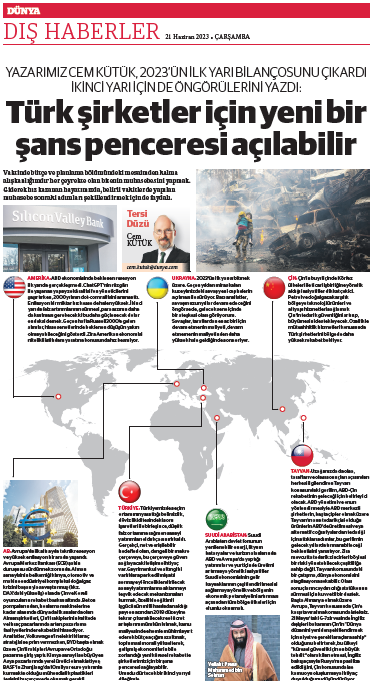
Aldım, verdim, ben seni yendim

Şirket satınalmalarında salan alınan halka açık ise işlem hakkında piyasanın tepkisi hemen anlaşılabilir.

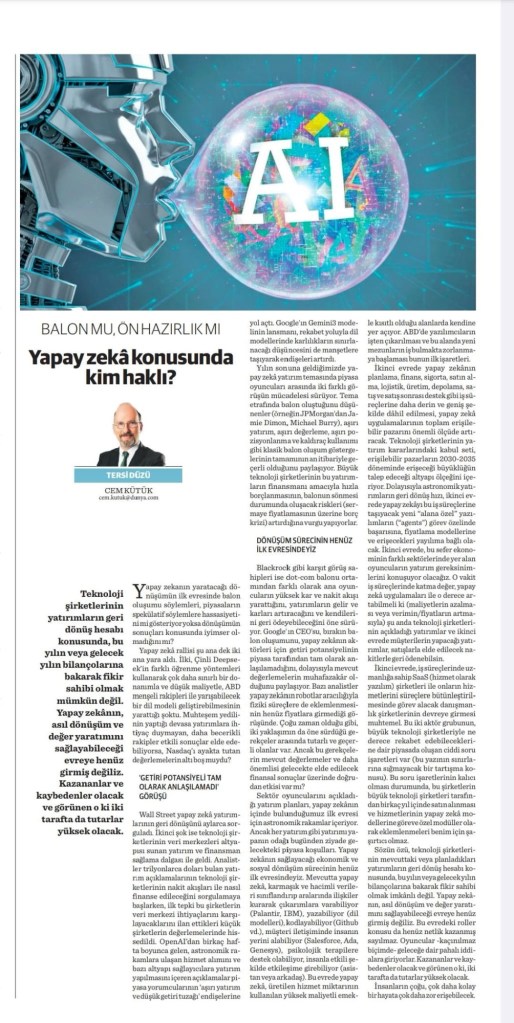
$TEP in $MAJ ı satınalması $MAJ hissedarlarına yaradı. Genelde de satınalınanın yüzü güler.
Mühim soru ise şu: #AI (yapay zeka) uygulamaları sektörü nasıl etkileyecek?

Genel içinde yayınlandı

Haber ve fiyat

Sermaye piyasalarında şirket haberleri ile #fiyat hareketleri arasındaki bağ (ve öngörülebilirlik) zayıflıyor. Aşırı fiyat tepkileri eskiden kısa vadeli kazanç fırsatı iken bugünlerde tepkinin yönünü ve zamanını kestirmek kolay değil.
Druckenmiller’a göre algoritmik trande ana sebep:
“these factor investors, algos and quants definitely really mess up what used to be historical price action versus news.”

Genel içinde yayınlandı

Bulanlar arayanlardır

“Bütün insanlar doğal olarak bilmek ister.” İskender’in öğretmeni Aristoteles’in, Akademi’deki öğrencilerinin aldığı ders notlarından oluşan ünlü Metafizik kitabı böyle başlar. Bilmeye yönelten istenç doğumdan itibaren bizimle, üstelik bildikçe artıyor. Teknolojik imkanlar ile iletişimin mekândan da bağımsız olarak süre gelebildiği hayatın yoğunluğu, zaman zaman “bilmemek bilmekten iyidir” (1) dedirtse de bizlere, günün sonunda, “yaşamak, yani ağır bastığından“ (2) öğrenme ihtiyacımız sürüyor. İnternet’in hızlı benimsenmesi de iletişimin yanısıra, öğrenme ihtiyacını etkili şekilde karşılamasından geliyor. İnternetin ilk yıllarında bir siteye erişebilmeniz için web adresini tam olarak bilmeniz gerekliydi. Bunun için bir defter tuttuğumu hatırlıyorum. 1990’ların ortasında web sayfalarında metin tarama imkânı veren arama motorlarının (Aliweb, Lycos, Altavista vd.) ortaya çıkması, web adresini bilemeyeceğimiz yüzbinlerce siteye erişmemizi sağladı. Yahoo, Explorer ve sonrasında Google ile hızlanan ve etkinliği artan arama motorları, arama sonuçlarının gösterildiği sayfaya aldıkları reklamlar ile devasa boyutta bir reklam mecrasına dönüştü.

İki genç kurucusunun geliştirdiği etkili algoritma ile güçlü rakiplerini alt ederek arama motoru sektöründe (Çin’in dışında) adeta tekel haline gelen Google, geçen yıl 283 milyar dolar net satış geliri etti. Şirketin güncel piyasa değeri 1.3 trilyon dolar düzeyinde. OpenAI adlı girişimin Kasım 2022’de piyasaya sürdüğü “sohbet robotu” ChatGPT’nin başarısı, “Artık arama robotlarına ihtiyaç olmayabilir mi?” sorusunu gündeme taşıdı. ChatGPT, dil algoritmalarının, görevli eğitmenlerce desteklenerek geliştirildiği bir dil modelleme aracı: sizinle sohbet edebiliyor, sorularınızı yanıtlıyor, siz sormayı sürdürdükçe yanıtları daha da detaylı olarak sizinle paylaşıyor. Sohbetin yanısıra bilgisayar programı veya kompozisyon yazabiliyor, test çözebiliyor, müzik parçalarını besteleyebiliyor. Kısaca bugün arama motorlarının sunduğu işlevlerin tamamını gerçekleştirebiliyor. Arama motorları aranılan içeriği en yakın şekilde sağlayan web sitelerine yönlendirme yaparken ve ilgili bilginin içeriğinden sorumlu değil iken, sohbet robotları kullanıcılarına doğrudan aranan bilgiyi veriyor. Bu durum, arama motorlarından farklı olarak, bu yazılıma verilen bilginin içeriği ile ilgili kavramsal, hukuki ve etik sorumluluk da yüklüyor. Daha karmaşık bir iş modeli.

Arama motorlarında listelenen sonuçların üzerinde öneriler olarak çıkan reklamlar, sohbet robotlarında -muhtemelen- daha doğrudan bir şekilde, öneri olarak karşımıza çıkacak. Böylesi reklam içeriği, satın alma etkisini ve reklam yatırımının geri dönüşünü (“conversion”) ciddi oranda artırırken, rekabeti de kısıtlayabilir. İlginç bir (potansiyel) rekabet hukuku sorunu. Sohbet robotları arama motorlarının bir ara yüzü olarak mı çalışacak, yoksa onların yerini mi alacak? Büyük teknoloji şirketlerinin oldukça karlı arama iş kollarını ortadan kaldırmayı değerlendirmeleri ancak çok daha karlı bir iş modelini oluşturabilmeleri (aklıma enerji sektörü geliyor) ile veya yeni bir oyuncunun onlara meydan okuyarak başarılı olması ile mümkün. Microsoft’un vakit geçirmeden ChatGPT’yi geliştiren şirkete yatırım yapma kararı alması, Google ve Baidu’nun kendi sohbet robotlarını hızla geliştiriyor olması bu açıdan önemli gelişmeler. Microsoft’un lansmanını yaptığı ilk uygulama, yapay zeka destekli sohbet robotlarının -en azından ilk aşamada- mevcut arama motorlarının etkinliğini artıracak eklentiler olarak konumlanacağını gösteriyor. Yapay zekanın insanla etkileşiminin hızla ilerlemesi, yalnızca reklam endüstrisini değil, perakende değer zinciri, eğitim ve sağlık hizmetleri, akıllı otomobil ve ev sistemleri başta olmak üzere, günlük hayatımızdaki pek çok sistem, araç ve altyapıyı değiştirecek. Bu değişimin, ekonomi (üretim, istihdam ve bölüşüm), doğru bilgiye ulaşım, bilginin kontrolü ve yayılımı, rekabet hukuku, haber alma özgürlüğü ve yönetişim alanlarında yaratacağı sonuçları önümüzdeki yıllarda sıkça tartışacağımız anlaşılıyor. Aramaya devam edeceğiz.

 (1) “Mara,” Asaf Halet Çelebi. (2) “Yaşamaya Dair,” Nazım Hikmet.

Not: Bu makalem 14 Şubat 2023’de Dünya Gazetesi’nde yayınlandı.

Genel içinde yayınlandı

Saying “no” to a customer

“At our company, we used to have a rule that you never say no to a customer. If you felt like you shouldn’t do something, you would get somebody else above you to make the decision. This would go all the way up to the manager before anyone would say no to a customer.”

Mr. Eisenberg – Mr. Feinstein
Founders of Bed, Bath & Beyond

Genel içinde yayınlandı

Bad weather, good reads

Stormy weather in Istanbul gave me more time to read in the weekend. Below are the summary of the remains of the week in my notebook:

> Foodservice Recovery in the US

With its defensive characterics in staples, food distribution also benefits from growth in relatively discretionery segments.

Restaurants -%60 of the overall foodservice=$600Bn– proved to be more resilient than we thought during the pandemic: Only 11% were permenantly closed and the industry fully recovered pre-COVID level sales in 2021. Although its growth in 2022 has been entirely price-driven, greater productivity per unit is encouraging.

Point to note: Independent restaurants are 4x profitable for foodservice companies than overall restaurants channel on the back of higher penetration of private label, higher service levels and dynamic pricing.

Retail ($71Bn) is expected to be fastest growing part of the market with 7-8% growth p.a.

Travel & Leisure represents $63Bn part of the market and still down 40% vs 2019 levels! The segment is expected to grow around 3-4% p.a for the next decade.

Healthcare ($31Bn) is highly resilient and captured all of the pandemic sales losses.

Education ($34Bn) is another resilient part of the market that fully recovered to 2019 levels and expected to grow by 2-3% p.a. for the next decade.

Looking at the valuation of major players, current levels (9,5x-13,0x EV/EBITDA) are much lower than pre-pandemic levels (16,0x-21,0x) and considering M&A track-record of the major players (CYY, USFD, PFGC) looks reasonable.

> Fast-growing Apple Pay adoption is threathening PayPal

As per #Salesforce eComm data covering 1.5bn shoppers globally, global eComm has fallen 2% in November 22. UK & Ireland eComm are weakest in Europe, followed by Germany and France.

Interestingly, Apple Pay grew 59% (makes up 6% of US eComm) in November in the US while PayPal (15% of US eComm) adoption has fallen 8% yoy.

Unpleasent take for PayPal shareholders: Extremely benefited from pandemic era surge of eComm, PayPal shall possibly continue to face strong competition from Apple Pay in the next years.

> Electric Smelter Furnaces’ (ESF) advance in steelmaking

Direct Reduced Iron (DRI) is put forward as main tool for decarbonisation of steel making in Europe. Problem is that it requires high grade iron ore pellets which is rare in the proven reserves (c.3%). A solid alternative could be ESF which is tried in the pilot applications across Europe by #thyssenkrupp and #tatasteel.

ESF uses same converter (no certification changes), cheaper electrodes, creates much more slag and use a wide array of iron ore feedstock.

If ESF proves to be a preferred way to decarbonise, met coal demand deceleration could gain further monentum. Met coal producers are possibly very good examples of #valuetrap in the market.

Act, while waiting for Godot

Auto OEMs has been valued at low multiples despite their resiliently high cash flows in last 3-4 years. (Hard to understand for me!) Pandemic, #semi shortages and EV #disruption by new (and mainly Chinese) entrants have been among the reasons for investors/analysts to justify low multiples. (None is credible in my view.)

The news is that US is waking up to the EV race and Inflation Reduction Act shall possible be instrumental in this. IRA includes an array of incentives (similar to Chinese incentive scheme) for electric vehicles and clean energy investments in the US.

$7,500 EV tax credit, formally known as the clean vehicle credit, is introduced by IRA and this figure is split into two equal halves of $3,750. In order to be eligible for the new credit, vehicles and consumers must meet certain requirements: 

  • A vehicle is eligible for one-half of the total credit ($3,750) if the vehicle has battery components that are manufactured or assembled in North America. 
  • To be eligible for the other $3,750, a vehicle must have critical minerals that were extracted or processed in the U.S. or countries with which the U.S. has a free trade agreement, or use critical minerals that were recycled in North America. 
  • Final assembly must take place in North America for a vehicle to be eligible. 
  • Only cars under $55,000 or SUVs, vans, and pickup trucks under $80,000 are eligible for the credit. 
  • On the consumer side, the income cap to be eligible for the credit is $150,000 for single filers, $225,000 for head of household and $300,000 for joint filers. 
  • There will be an option to apply the new credit at point of sale starting in 2024 and will end by 2032.
  • The new credit requirements for battery components and critical minerals will take effect January 1, 2023.

Interestingly, The IRA also establishes an unprecedented credit for used EVs ($4,000 or up to %30 of the vehicle price, whichever is lower).

As expected, EV charger credit has been extended through 2032. The credit is available for both individual and commercial uses to help cover the cost of charging stations.

Main motivation of these incentives are to accelerate US EV factory buildout and initial feedback from OEMs showing that could be achieved. The incentive package is well-timed for OEMs as EV demand in two largest EV markets (China and Europe) has been sluggish. Even limited upside in US EV demand would offset the downside risks for EV demand and roll-out (which were exagerated in my view, as in the case with all ‘hot topics’).

OEMs are nowadays busy with securing their place in EV battery and equipment supply chain:

> Tesla and VW is trying to internalizing some of EV battery production while majority of other OEMs are building JVs with battery cell makers.

> VW and GM announced battery material JVs on cathode/procursor areas.

> Long-term agreements with miners become a common practice (STLA, Renault, GM, Ford) in last two months, securing supply for lithium, zinc and other critical raw materials.

> Tesla, GM and BMW also shown interest to enter lithium refiningas well as material recycling.

All these efforts shows to me that OEMs’ managements finally decided to put aside their waiting mode for emerging battery technologies and act on what is currently available in terms of technology and materials.

One should also act, en attendant Godot.