Age of Ad Networks

#Digital advertising market is going through a serious change for the last couple of years. State-level privacy laws in the US and platform privacy policy decisions (ATT of #Apple for instance) those have propelled are changing the ownership of the data available in the web and platforms and the ways it could be deployed by the platforms and advertisers.

Once having their utmost privilege to the abundant “first-party” user data and freedom to process these to create a well-crafted audiance “profiles” for the advertisers, platform companies such as Facebook and Google are trying to turn their apps into content and app distribution portals. AMP (Google) and Instant Articles (Facebook) are the recent examples of this trend. That is happening because “hub-and-spoke” model* of digital advertising (summarized at the end of this article) is not working well anymore.

And that is the primary reason behind recent collapse of #Meta share price as its first-party data (your likes, comments and inputs into the groups) is not much helpful for #targeting as your purchases in a mobile game or on the web.

So what is the next?

Many companies (advertisers) are developing their own proprietary ad network. Yes, that is.

Reason being that will allow them to #monetize their own data (and #Apple is among them).

Just to provide a couple of instances:

> Walmart is expanding its ad business through M&A

> Following UberEats, Doordash launched an ad platform.

> Zoom is introducing ads to its for free users

> Ironsource acquired an ad network Tapjoy…

So dear investors, get ready to see “Ad Network” lines in the 10-Ks of listed companies soon.

And sorry for those large platforms, those good old days seems to be too far away to make a good comeback. They, certainly, will try to adapt to the new circumstances.

*The model was based on operating a data warehouse full of usage “signals”, converting those signals into #targeting parameters, applying those to the ad inventory and creating positive feedback loop for the advertisers through engagement data.
A Quality Asset

Quality of the asset is of significance when it comes to #valueinvesting. Under a cloudy sky, it is even more so. #SBUX is one of those names in consumer universe that I feel the need to follow closely.

What makes #SBUX a quality asset?

The question that should be asked in the boards of all consumer/restaurant players around the world I believe.

A couple of elements relevant to #SBUX through my lens:

> Managing expectations of its own people well. “Because if we want to exceed the expectations of the customers, we have to exceed the expectations of our people” (Schulz explaining further increases in wages beign “ahead of the curve” at discussion of F2Q22 results)

> Ensuring customer continuity. Hugely successful Rewards programme which currently has 27.4Mn members in the US! By F3Q22, the spend by rewards members is at record levels. %58 of revenues come from Rewards members which showes huge #brandloyalty, which is challenging to create in restaurants/ food retail universe. What I like (for cash flow yield) in the Members program is the following: Customers #prepaid $11Bn of their purchases in 2021!

> Cash-on-cash returns (what a shareholder could like to see more?). It is around 70% at F3Q22. ROIC being 101%.

Going through F3Q22 numbers, one should note that US SSS of 9% is not a great performance compared to its universe where +15% is average topline growth in the same quarter. However, I liked the shift to cold beverages (75% of the beverages) which is difficult to replicate at home and higher partner engagement scores which has a track record of converging into SSS.

Genel içinde yayınlandı

İyi, kötü, avuntu…

Her birey kendisini gündelik hayatın haksızlıklarının üzerine çıkarmalı, ancak bu sayede ‘kaderin cilveleri’ ile iyilik arasındaki çelişkiyi aşarak, nihai ‘İyi’ ile birleşebilir.

Benim için geçen haftanın kitabı olan, Ortaçağ Avrupa’sında en çok okunan kitapların başında gelen “Felsefenin Avuntusu Üzerine” eserinden aklımda kalan, bu önerme oldu.

Kitabın yazarı, imparatorluğun çöküşünü takiben, Ostrogot Theodorich’in hüküm sürdüğü, yaşlı ve bakımsız Roma’da sarayın himayesinde felsefe çalışan, Aristo’nun mantıkla ilgili tüm kitaplarını Latince’ye çeviren Boethius’tur.

Theodorich’e ihanet ile suçlanan Boethius’un, idamını beklerken hapishanede yazdığı “Felsefenin Avuntusu Üzerine”, Dante’ye -kendi ifadesine göre- sevgilisi Beatrice’nin ölümünün ardından tahammül kazandıracaktı.

Boethius’un bu savı, akla Augustinus’un (ve esasında onu esinleyen Plotinus’un) iyi “idea”sını ve onun ancak sevgi aracılığıyla bulunabileceği önermesini getiriyor.

Her şey zıddı ile mevcut ise, bu kısa notu, Uruguay’ın bilge adamı (eski devlet başkanı) Jose “Pepe” Mujica’nın sözü ile bitirmek ilginç olabilir: “Bazen iyi olan kötüdür, kötü olan ise bazen iyiye yol açar”

Software part of EV value chain: Un trajet court

Back in March, I shared my expectations on the changes in automotive value chain in next couple of years (will revisit those expectations as we got into next years to see how these shall play out.) and promised to elaborate on software and raw materials in a separate discussion. Here is a “trajet court” on the software part of EV value chain:

Autos are becoming a “software defined” vehicles. Meaning that, just similar to the smartphone migration trend over the past decade, the traditional vehicle shall possibly transform into a computing platform to support applications such as V2X, smart cockpit, entertainment and autonomous driving.

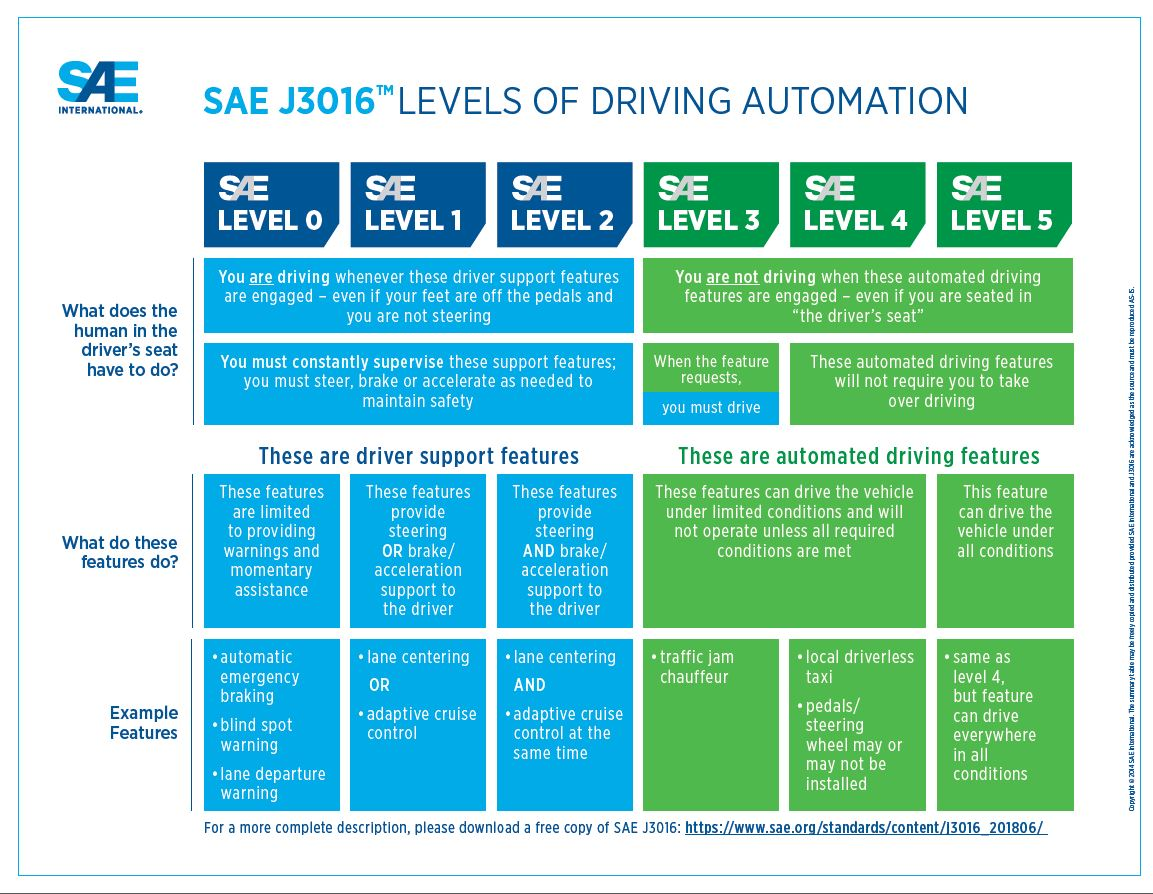
As per Society of Automotive Engineers International, diving automation is classified into 6 level, L0-L2 are considered as driving assistance (that is what the automobiles you are using right now offers to a degree) and L3+ are considered to be highly autonomous.

L3+ are yet to be commercialized since it will require the legislations and infrastructure to further developed. However these are being heavily tested especially in China by #Baidu who is trying hard to commercialize its auto software solution to diversify its revenue stram away from advertisements and in America by Mobileye (#Intel).

The autonomous driving value chain includes sensing (maps, lidar, camera), decision-making (OS, algorithms, domain controller) and execution (hardware, breaks etc.).

Structure of auto computing systems, which are critical in sensing and decision-making dimensions of the value chain, could be categorized into the following:

  1. Computing platform: Consists of (i) Processors: Control chips (MCU) which manages data collection, sensing and actuating, Computing chips (CPU) that executes instructions and AI Chips (GPUs or ASICs or FGPAs), power semiconductors (IGBT, MOSFET etc.) and sensor chips (TPMS etc.)
  2. Operating System: #Linux, #QNX, #Google or #Baidu which will oversee engine control, battery management and infotaiment
  3. Smart Cockpit: Voice/Speech recognition, movement recognition, gesture recognition
  4. ADAS: Autonomous parking, adaptive cruise control, electronic brake system, HD map integration
  5. Algorithm library
  6. Middleware

Huge competition is underway for computing platform and operating system parts as these are the backbone of auto software market and the evolution of smart cars offer huge TAM for semi and software companies.

A very good overview, I believe, on what is going on in the market was provided by Qualcomm CEO Cristiano Amon in Bernstein 38th Annual Strategic Decisions Conference (June 1, 2022):

“Well, couple of things have changed now high level, number one, I think car companies realize that they need to have a direct relationship with semiconductor companies, some of them didn’t understand what the importance semiconductor supply chain.

Number two, the market expect the car companies to be tech companies. I love to keep
bringing in this example. At some point Rivian selling hundreds of trucks was worth more
than Volkswagen. So the — what is basically saying is the companies need to be tech
companies they need digital assets. With piece number three, which is it’s not about
components from the care, but do you actually have a digital platform that they can build
on the digital platform, a lot of software assets and then apply that up and down for
different models
. That’s the unique thing about the digital chassis.”

Turkish automotive suppliers and IT players including #ventures and #startups are better to have a close eye on what is going on the autonomous driving value chain to keep their shares in execution part of the chain as supplier to OEMs and (hopefully) to try to capture a share in sensing part.

The party yet to end for port owners and liners

Liners, ship and port owners are having a great party since mid-2021. Seems that the party shall continue in 2H22. Below are the drivers that make me think that way:

* Key indicators for ocean freight, namely the #freight rate index and the annual TEU throughput increased to record highs.

* Seasonal patterns and COVID lockdowns led to less trade volumes and a recent softening of the index.

* #Maersk expects more than 70% of long-term contracts in 2022 out of all contracts, recently announced that could go up until almost 80%, an indication of significance for the guidance on world trade. This company earned $9Bn in the first quarter of 2022!

* Once China reopens following the lockdown (end of June or mid-July) huge amount of volumes will then have to be shipped out of China which are currently creating a backlog. That will not only increase the freights but push current congestion in Chinese ports to the west coast ports of the US and that shall possible take 4-6 months to normalise…

* The contracted #TCE is actually increasing, vessels that we have been able to fix for longer periods are the ones that have also already higher #charter #rates.

Dynamics of pet-related market

The pandemic has rocketed the #pet ownership around the world and provide further tailwind to this high growth market. Following are a few points that kept my attention in the 1Q 22 webcast of Pets at Home Group plc.

“…the first thing is we recognize that the pet is a member of the family. And we recognize often the pet is placed apparel alongside children in terms of the priority to the household. The spend on pet, is still relatively small income in the context of the overall family funding spend and is very, very #habitual. So anybody who is a pet owner will recognize you feed your pet, pretty much the same thing day in day out same quantity, often same brand, which is very habitual…

I was here in 2010, when we saw the last major financial crisis, a different side of shape and a makeup, and customers were under pressure. And we saw two things happen. We saw overall spend on pet on go up and interestingly enough, it was our fastest acceleration into advanced nutrition, which I think is also quite interesting in terms of often that can give you better value overall in terms of the quality of the food that you feed and you feed less food.”

Prime as a service

Back in 2015 Amazon decided to end the service to independent merchants to run their web stores (Webstore) to focus on amazon.com and sent its customers to Shopify, announcing the Canadian company as preferred partner. In return, Shopify agreed to offer #AmazonPay to its merchants and allowed them to list their products on Amazon directly from its dashboard.

That decision of Amazon – made on the wrong assumption that small retailers would not succeed in ecommerce which tends to be dominated by #economiesofscale – allowed Shopify to become a high-growth business. small retailers reached a turnover of over $150bn.

Amazon recently decided to offer “Buy with Prime” service to merchants off its platform, letting them to use its payment and fullfilment services. Since Prime significantly increased consumers’ service level expectations, merchants have constantly try to catch up with Prime.

Would Amazon makes the competition get better? “Ça depend du point du vue.

The play is that if customer choose to buy with Prime, it needs to pay via Prime Pay by which Amazon will have transaction data. That data is highly valuable input for conversion-data-driven advertising product.

One should also remember that Amazon is the seller in most categories and its private label business is growing well. Such data will possibly also be used to improve its own offerings in numerous categories.

Amazon will not only leverage its logistics costs and Prime Pay but also have much larger data to help on advertising and product customization. Shopify on the other hand will benefit from its merchants growing business via Prime network but possibly lose on its logistics operations.

It will be tempting to see how Prime network could be leveraged as in the case of AWS and what will it mean for the merchants and platforms like Shopify.

When there is no road, build one

Container supply problem and sky-high rates are derailing product availability and profitability of overseas trades and retailers.

German discounter #Lidl took a decisive action to safeguard its trade: “We can confirm that Lidl will use some of its own sea freight capacities in the future. This is another building block for securing our supply chains and the availability of goods in our branches” said a spokesman of the company.

Lidl is estimated to have 500-700 TEU per week of overseas cargo volume.

Asian producers exporting to US have also heavily impacted from the rising freight rates throughout 2021 and trying to find ways to operate their supply chain efficiently.

Management is about finding solutions to problems…

A concise look at energy transition

Well-known: The basic mechanism of all free markets is suppy demand equilibrium.

The pricing in free markets works on this simple mechanism. The equilibrium price and equilibrium quantity occur where the supply and demand curves cross. The equilibrium occurs where the quantity demanded is equal to the quantity supplied. Once the price is below the equilibrium level, then the quantity demanded will exceed the quantity supplied that shall result in increased price, push to the equilibrium price. The same happens in the opposite way.

Another well-known: Energy is not a free market.

(i) The supply of oil is (somehow) managed by a cartel called OPEC. (ii) Sources of energy are concentrated in certain parts of the earth and this pawes the way for geopolitics to play an effective role in the supply dynamics. (iii) As exploration and production is quite capital and technology- intensive, dominance of a number of large companies is the fact. (iv) Enourmous amount of financial instruments defined over the price of the energy is traded every day which disrupts the pricing mechanism. Hedging and manipulation goes together.

The fact: Drive towards net zero is expensive. Huge investment is needed, cost of ‘clean’ energy is relatively high, ROE is lower compared to hydrocarbons.

My take (2020) : Two exits from here. (i) Price of hydrocarbons (somehow) gets to the higher level which makes ‘clean’ energy investment and usage more feasible. (ii) The efficiency is increased in generation by new technologies bringing ROE of ‘clean’ to a higher level.

Where we are: No news from efficiency increase in generation yet. Good progress in the first exit (on the back of lower capex for last 5 years, political tension with Russia, carbon tax).

Good for: States that exporting hydrocarbons, investors of energy companies, companies providing services and equipments for hydrocarbon exploration and production (exploring software and hardware, well services, off-shore services etc.), transporters of hydrocarbons, petrochemicals (in short term), electric vehicle producers, battery producers (companies offering energy transition services, electrification industry ($SIEG, $LEGD, $ENR1), cable industry ($NEX), grid management services.

Bad for: All consumers, energy importing states, petrochemicals (in long term), energy-intensive industries (steel, cement, glass, sanitaryware, building materials, electricity generators, datacenters, suppliers of ICE powertrain).

Short and medium term risk for the first exit: High inflation and expected slowing of growth in the economies caused by normalisation of monetary policy shall lower the disposable income. Increasing energy bill is certainly not helpful. If economies gets into stagflation, net zero will be too painful to realize.

to be or not to be…

As you know from my recent posts, I am having my eyes constantly on the developments globally in transforming industries such as #energy, #transportation and #automotive.

OEMs are struggling versus the competition of new entrants in #EV domain. BMW, Ford Motors and Daimler are among those struggling with EBIT margins around 7-8% in recent years (except covid period). They are currently investing billions of dollars to achieve their transformation and investors are looking at the progress very carefully.

No post on autos could do without some auto visuals 🙂 I ended up choosing Daimler EQXX…

I expect the following changes in automotive value chain in next couple of years:

  • Dramatic overhaul of go-to-market: Starting from Europe, the dealerships will be transformed. It is not acceptable for dealers to earn 300-700 bps while OEMs are making c. 7-9% margin. Order-to-delivery cycle will probably be run by OEMs. Kind of agency models shall be developed and prices and commissions of agent shall possibly be fixed for each country. OEMs shall run flagship “technology stores” in the centers of cities and you will “experience” the models in these stores. This is already in progress in China. Newcomers such as #Apple and #Xiaomi shall also use this model. In the US market where dealers have greater power compared to other markets, the diffusion of agency model shall probably take a decade or longer however it is clear to me that franchise model shall even end in the US. Tesla’s distribution costs are hard-to-beat now however this is “to be or not to be” issue to handle for OEMs.
  • Players will have to reduce #complexity in their #organizations and #products. Not only EVs shall need fewer number of components but also EV players would need much leaner organizations. This shall result in loss of certain know-how through downsizing their organizations but possibly enhance their decision-making speed. Reducing the complexity in their products would ease supply chain and lower their huge working capital need.
  • They need to improve quality of products dramatically. Warranty costs are significant part of total operating costs and needs to be put down. Only way to achieve this is to manage substantial increase in quality of products. This shall be a critical step which could call the winners and the losers.
  • OEMs use lots of working capital. Partial release of these is inevitable to reach higher FCFs. Production needs to be modified into a “build-to-order” system to achieve this. What a challenge!
  • Advertising costs are huge burden in the P&Ls. The industry has to get rid of majority of these to achieve the margin its investors are asking. Having a customer loyalty like Apple’s is the only way out to achieve this! Once achieved, that could bring dramatic reduction in marketing costs. I deliberately used Apple example because an electric vehicle is a software-driven tool. #Software, in my view shall be the new determinant where the competition will be. (touched upon that before in my review of the application of AI in #EV)
  • Safeguarding raw materials to avoid any shortage in supply. Average EV battery would probably (acc. to battery technology) need 50kg. of nickel along with lots of lithium. If you look at the nickel and lithium market nowadays (under heavy impact from Ukraine war), the concept becomes seld-explanatory…

There are more dimensions of this transformation journey, that is sure thing. But as I am trying to adopt 5min. rule for each blog post, better to stop here. Planning to elaborate on software and raw materials in a separate discussion.